The Mississippi State University Extension Service is urging residents to learn more about the invasive Asian needle ant, a species that has been found in the state and can pose both health and ecological concerns.
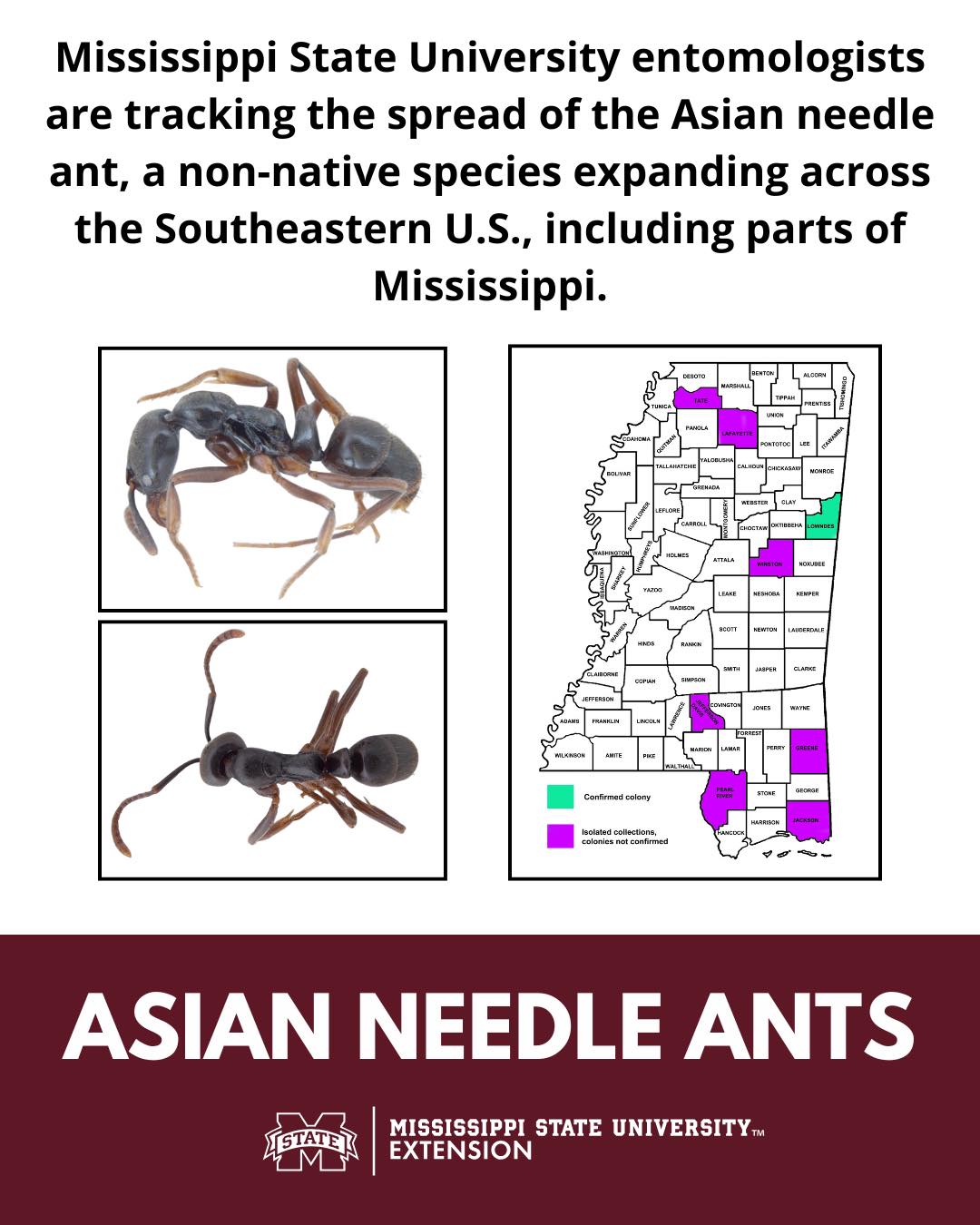
According to MSU Extension, the Asian needle ant, known scientifically as Brachyponera chinensis, was first reported in Mississippi in 2013. The ants are small, about one-fifth of an inch long, dark brown to black, shiny and have a single large node on their waist, known as the petiole.
Extension officials said that, aside from a single confirmed colony in Lowndes County in 2025, other findings in Mississippi have been isolated.
The ants are not considered aggressive and will usually avoid people when possible, according to MSU Extension. Most stings happen accidentally. Like many ant species, the Asian needle ant uses a stinger to inject venom, which can cause a painful defensive sting.
MSU Extension said the ant’s venom has been linked to life-threatening allergic reactions, including anaphylaxis, though such reactions are not especially common. Officials said people who are allergic to stings from other insects should be aware that they could also experience a severe reaction from these ants.
The ants are usually found outdoors in wooded areas, often nesting under leaf litter, pine needles and rotting logs.
Researchers said the species can build large populations that outcompete, displace or prey on other insects, creating a significant ecological concern in areas where infestations become established. MSU researchers said they are continuing to track the spread of the ants and monitor infested sites to study effects on native species and local ecosystems.
To help reduce possible harborage areas, Extension officials recommend moving firewood piles away from homes and removing piles of leaves or pine needles.
Residents who believe they have seen Asian needle ants are encouraged to submit physical specimens and collection information to the MSU Extension Insect ID Lab to help researchers track the species’ spread in Mississippi.