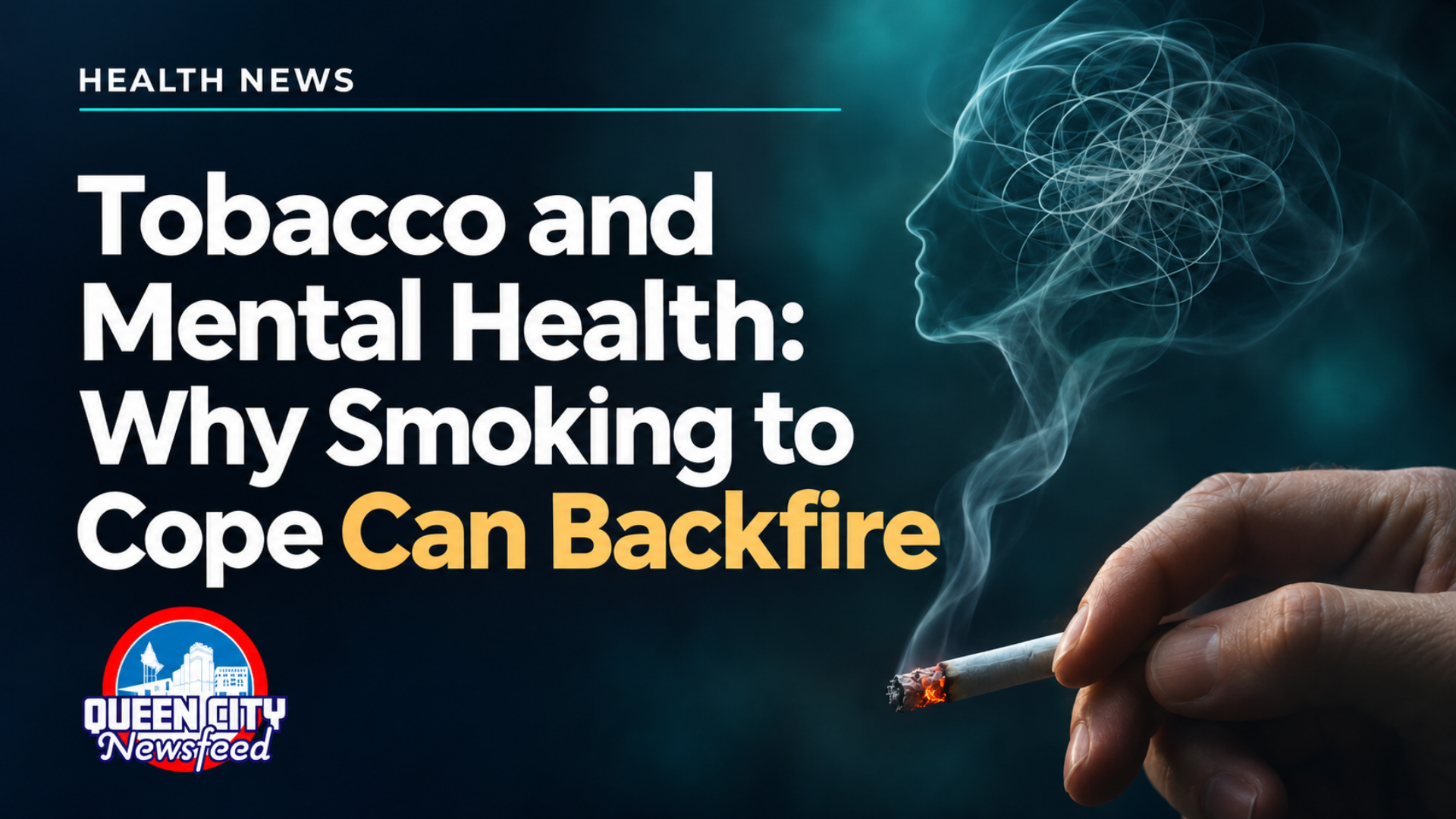
MERIDIAN, Miss. (Queen City Newsfeed) – Many people reach for a cigarette, a vape or a dip when stress hits. However, state health leaders say tobacco and mental health are linked, and the habit can make stress worse over time.
The Mississippi State Department of Health, or MSDH, shared that message for National Depression and Mental Health Screening Month in October. Now, the Mississippi Tobacco-Free Coalition of Lauderdale and Newton Counties is sharing it with people here at home.
The timing also matters for anyone thinking about quitting. The Great American Smokeout is Thursday, Nov. 19. On that day, the American Cancer Society asks people to quit or make a plan to quit.
How tobacco can affect your mood
MSDH says many people smoke or vape to deal with stress. Over time, though, the agency says nicotine can upset healthy mental function and emotions. As a result, stress, anxiety and depression can get worse.
The agency says this is a special concern for teens and young adults because their brains are still growing.
What the numbers show
The Centers for Disease Control and Prevention, or CDC, says nearly 25% of U.S. adults have a mental health or substance use disorder. Those adults smoke almost 40% of all cigarettes smoked by adults in the country.
The CDC also says these adults die about five years earlier than people without those conditions. In addition, they make up nearly half of all deaths tied to tobacco each year.
How quitting can help
There is also good news. The CDC says quitting smoking is linked to:
- Less depression, anxiety and stress.
- A better quality of life.
- Better results from mental health and addiction treatment.
- A better chance of staying away from alcohol and drugs.
- A much lower risk of heart disease, stroke and cancer.
For example, the CDC says the risk of a heart attack drops sharply just one year after quitting.
What to expect when you quit
Quitting can feel hard at first. The CDC says some people feel irritable, anxious or depressed for a short time as their body adjusts. Being active, staying busy and spending time with other people can help.
After a few months without smoking, the CDC says anxiety and depression levels are often lower than before. However, get help if those feelings last more than two weeks, feel like too much or get worse. Your doctor is a good place to start.
If you take medicine for your mental health, tell your doctor you plan to quit. The CDC says smoking can interfere with some of those medicines.
Where to get free help
Mississippians can get free help from the Mississippi Tobacco Quitline. Here is how to reach it:
- Call 1-800-784-8669.
- Visit quitnow.net/ms.
- Text READY to 34191.
MSDH says the Quitline is free and confidential. It offers coaching and quit plans. People who qualify can also get free nicotine replacement therapy, such as patches or gum.
The Quitline also has special services for veterans, people living with mental health conditions, and people who are pregnant or just had a baby. In addition, MSDH says expert help can double your chances of quitting.
In its most recent year, 5,819 Mississippians contacted the Quitline, the agency said. Of those, 3,084 signed up for treatment.
Teens and young adults who want to stop vaping have another option. They can text EXPROGRAM to 88709 to join the free EX Program from Truth Initiative. Message and data rates may apply.
If you need more support
If you or someone you know is in a mental health crisis, help is available day and night. Call or text 988 to reach a trained counselor. It is free and confidential. In an emergency, call 911.
To find mental health services near you, call the Mississippi Department of Mental Health Helpline at 1-877-210-8513. To find a tobacco coalition in your county, call the MSDH Office of Tobacco Control at 601-991-6050.